01:28:08 · 02:04:16 · 02:30:55
Who ends up on which side of the cloth?
The cloth is described as an object in a living room and as a layer someone needs. How does it later place performer, camera and audience on different sides?
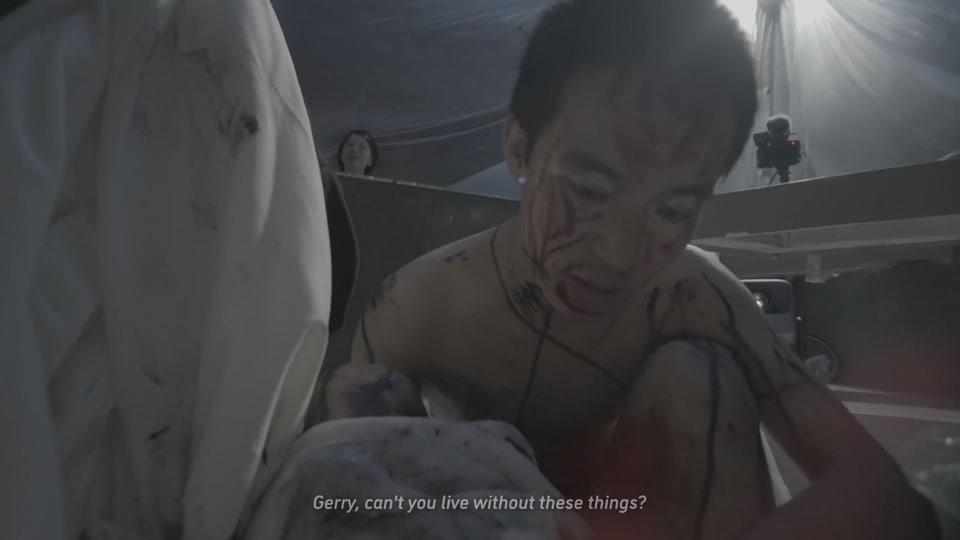 02:04:12Open the frame in the timeline
What happens here
Start with the white sheets at 01:28:08, then look at the figure next to hanging fabric at 02:04:16. Put the exchange at 02:30:55 beside the performance recording and compare who faces whom and who remains out of frame.
A way to read it
These points are far apart. Compare the recurring object and the positions around it, and use the source records to check the identity of the physical cloth.
Dialogue in context
-
01:28:08Open the transcript in context ↗White sheets in the living room
白色的床单在客厅里
-
02:04:16Open the transcript in context ↗Gerry needs a layer of cloth
甲瑞他需要一层布
-
02:30:55Open the transcript in context ↗So this is what you want
所以这就是你想要的
Frames and timecodes
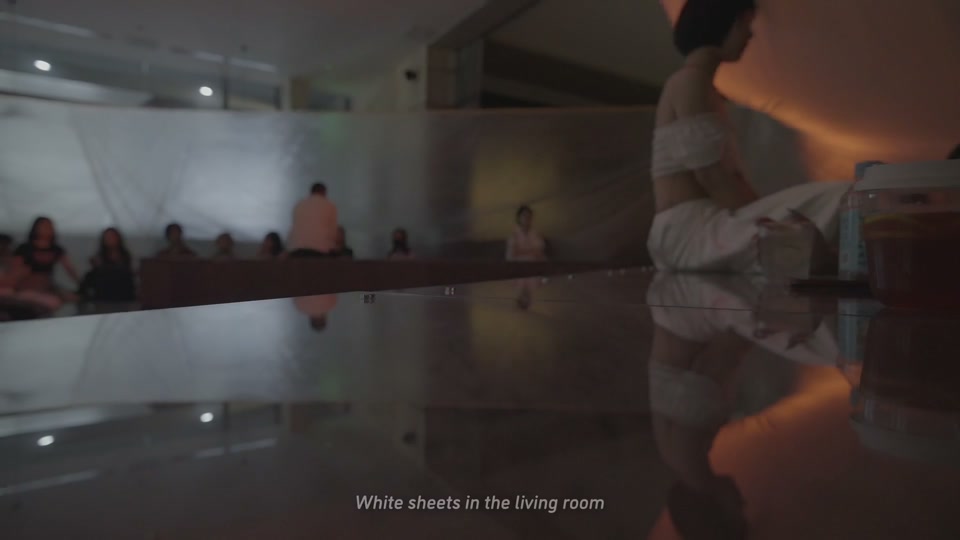 01:28:06 ↗
02:04:12 ↗
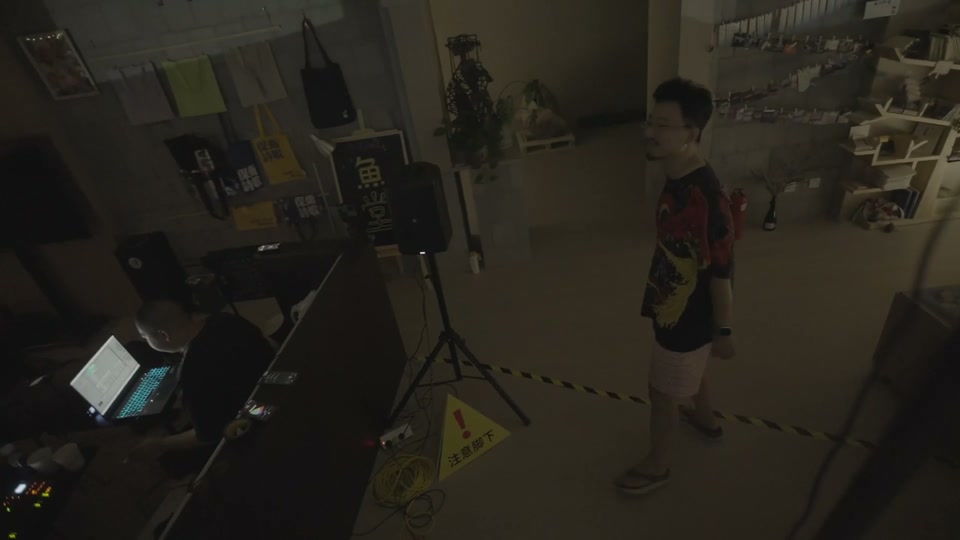 02:30:54 ↗