Who Can End the Performance, and Who Stays in the Scene?
Follow two proposals in Tomorrow Does Not Exist back to the July 31 draft, then watch The Last Rehearsal and Shoot Self with You say “Our performance is over” side by side. Listen to what follows.
If one person stays in character, can the others leave?
A character in the draft would choose to keep going; another calls for a restart. How does rehearsal turn that difference into a rule the performers can take turns following?
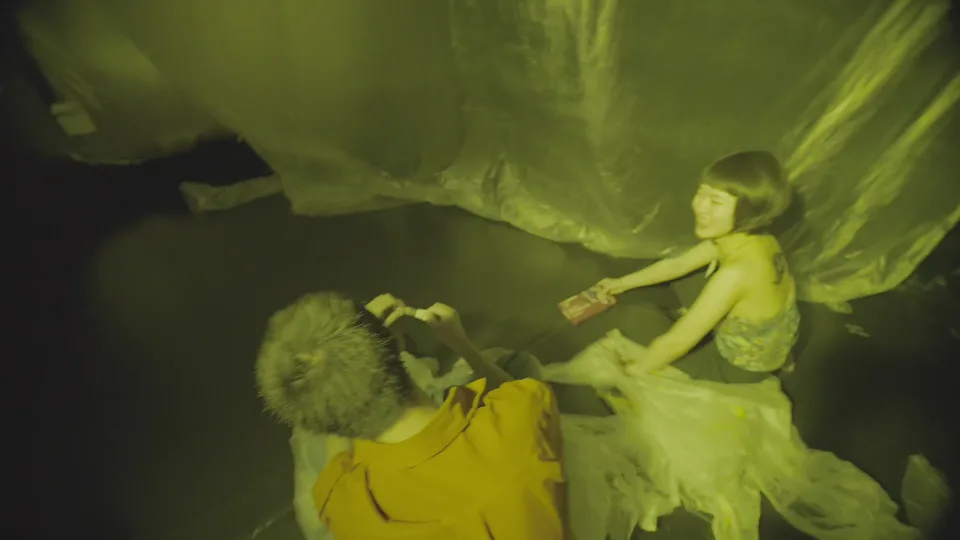
In the July 31 draft, refusing to end is a conditional choice, and a different speaker calls for the restart. The rehearsal at 28:01 distributes those tasks across three people. At 28:12 they suggest that the one who stays can rotate. One person can step out while the scene continues.
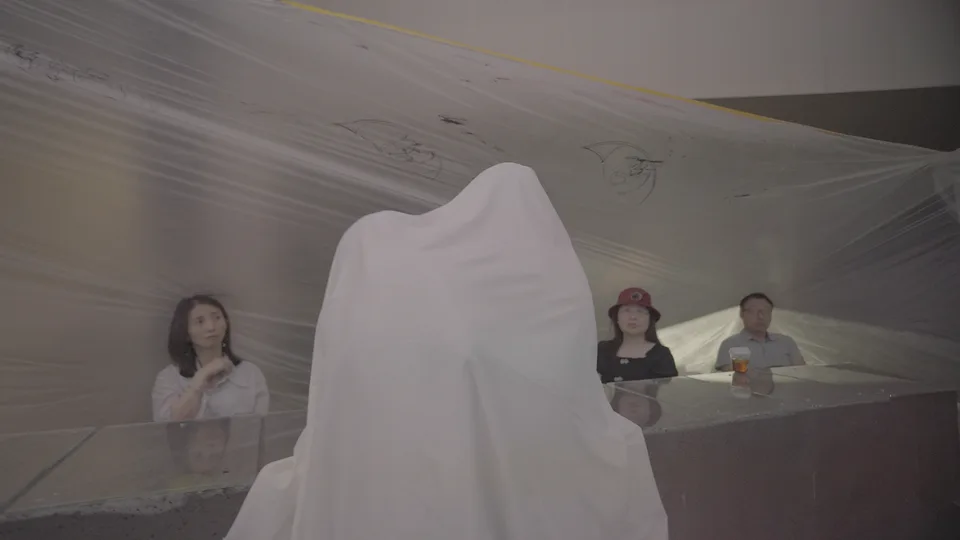
The route is proposed at 34:13. At 34:34 someone asks where they could run and says they cannot get out. The August performance shows the relationship between the cloth and the seats. After the White Cloth documents the blocked camera view, which leaves part of the path unseen.
“Our performance is over” can be heard in both versions
Put the same line back into the performance and the feature. Does the announcement close the performance, or do all the actions and voices stop at once?
The Last Rehearsal · performance compilation
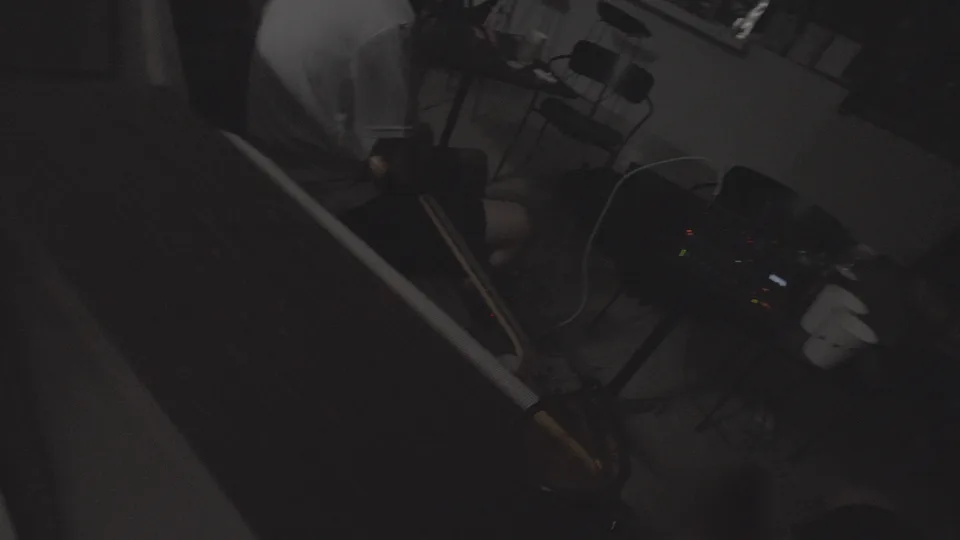
▶ 01:43:16Camera frame at 01:40:53.30. The announcement is around 01:43:17 in the public compilation; the link starts a second earlier.
The film transcript attributes the announcement to He Fa. The line, the correction to four and the invitation to play afterwards align with C0299 on the same audio offset. That identifies the spoken end of the performance and the live voices that follow. The next comparison follows what the edit does with those voices.
What stays in the room and in the film after the announcement?
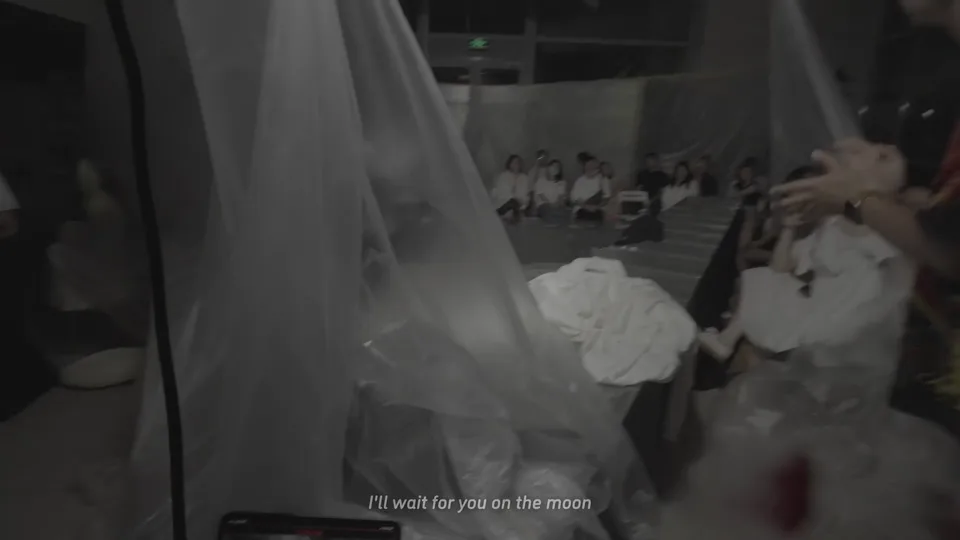
The room still has counting, thanks and an invitation. The film then adds a line about waiting on the moon. What separates staying in the room from staying in the scene?
The Last Rehearsal · performance compilation
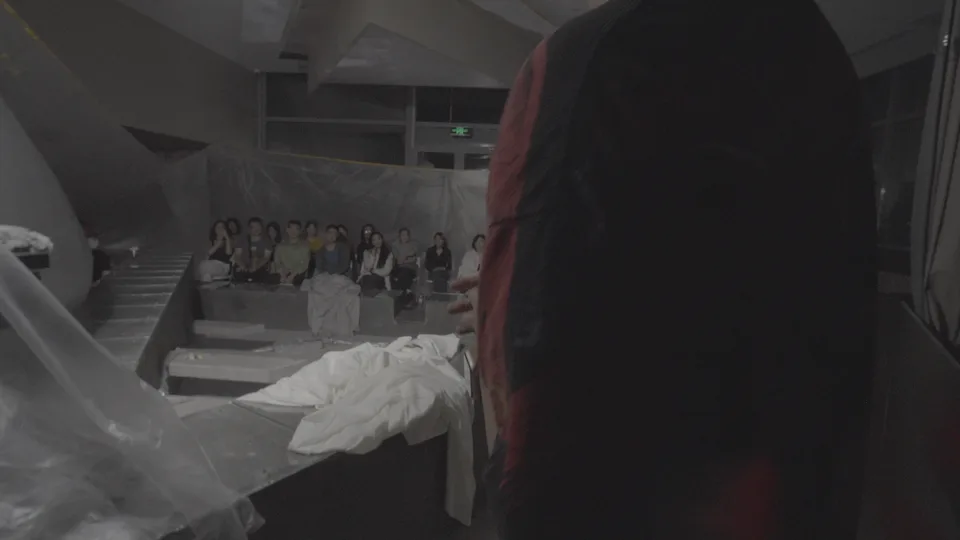
▶ 01:43:27C0299 frame at 01:41:03.95. The line falls around 01:43:28 in the compilation; playback starts at 01:43:27.
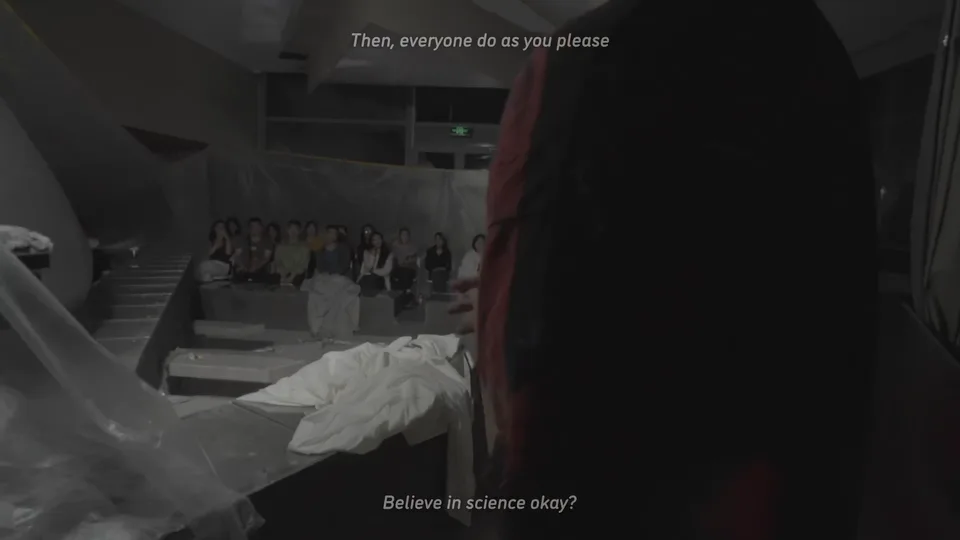
“Have fun everyone” still aligns across the performance and the feature. The film next retains “I’ll wait for you on the moon”; the performance recording does not securely establish an alignment for that whole line. The announcement completes a public action while voices continue and the film can place another address alongside it.
 00:28:01
 00:34:13
 01:39:39
 01:43:16
 01:43:27
 02:32:11
 02:32:13